Rotorua Hāngī Dinner and Concert
What a Rotorua hāngī dinner and concert really involves — the wero, the pōwhiri, what you are expected to do, what the food is, and which operator opens the pit.
“Hāngī dinner and concert” sounds like a meal with entertainment attached. It is closer to the reverse: a formal welcome ceremony with obligations on your side, a performance, and then — last — the food. Knowing that in advance is the difference between an evening that feels moving and one that feels confusing.
Check Availability
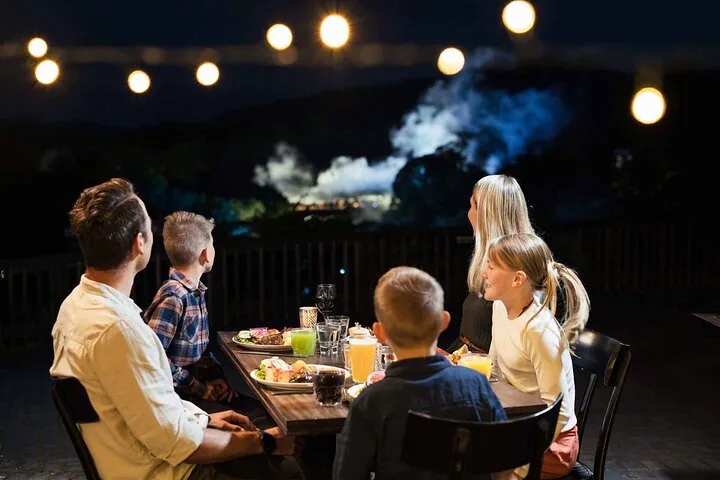
Te Puia: Te Pō Indigenous Evening Experience with Dinner
- 4.7/5 (120 reviews)
- 3 hours
- Free cancellation
- Operated by Te Puia
Includes 45 minute Māori cultural performance · Water, Tea and Coffee · Hot chocolate at the geyser terrace
You'll choose your date and complete the booking on Viator. Reserve now, pay later on most departures.
What a hāngī actually is
A hāngī is food cooked in a pit. Stones are heated in a fire until they glow, dropped into a hole, and baskets of meat and root vegetables are stacked on top, covered with cloth and earth, and left for hours. What comes out is not smoky or charred — it is steamed, dense and faintly earthy, and the texture is unlike anything an oven produces.
The standard contents are chicken, lamb or pork with kūmara, potato and cabbage, usually followed by steamed pudding. Te Puia’s buffet also includes kai moana, seafood, which the others do not.
Here is the part that surprises people: all three big operators serve genuine hāngī, but only one lets you watch it come out of the ground. Mitai opens the pit in front of guests and lifts the baskets before the buffet is served. Te Puia cooks the same way and brings it straight to the restaurant. Te Pā Tū serves plated seasonal courses. If the ceremony is what you are paying for, that narrows your choice to one operator.
Other Experiences
Other experiences you might enjoy
More ways to experience Māori culture in Rotorua — all bookable with free cancellation.
The evening, in order
Every operator here runs the same underlying structure, because it is a pōwhiri — a formal welcome onto a marae — rather than a show format.
Pickup and the coach briefing. Most evenings collect you from central Rotorua accommodation. On the way in, the guide explains that your busload is now a single visiting group, and asks it to choose one person to represent it. This is not an icebreaker; that person has a job in twenty minutes’ time.
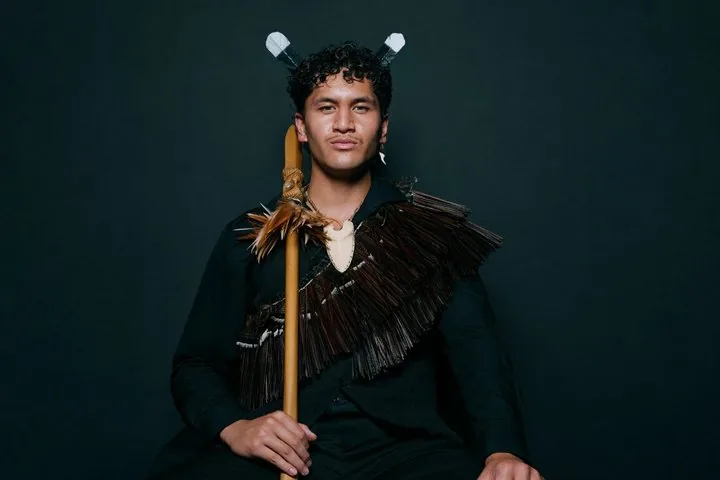
The wero. At the gate a warrior advances with a taiaha and lays a token on the ground. Your representative picks it up while holding eye contact. Everyone else stands still and silent. It is deliberately confronting, it is over in two minutes, and it is the part people describe afterwards. Small children sometimes find it genuinely startling — worth a word beforehand.
The pōwhiri. Karanga — the calling voice — then whaikōrero, the speeches, then a waiata from the hosts and one back from your group. The song you were taught on the coach is for this moment.
The concert. Kapa haka: waiata, poi, stick games and haka, around forty to forty-five minutes, seated. Cameras and video are welcome at all three operators.
Lifting the hāngī, or not. At Mitai the covering comes off and the baskets come up steaming. Elsewhere, the food is already plated or on the buffet.
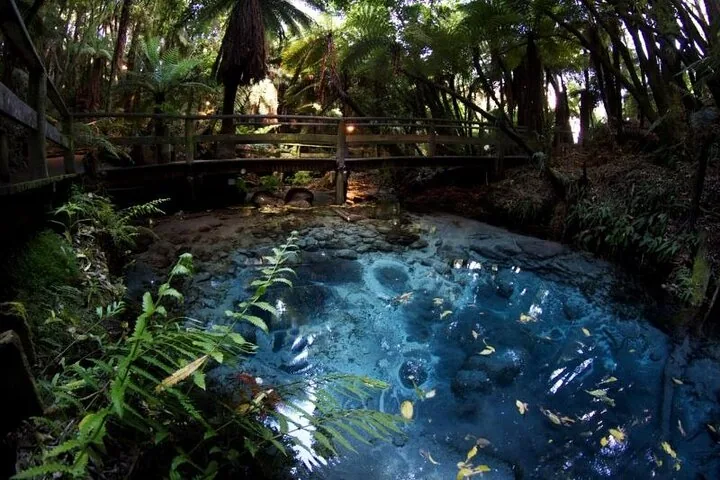
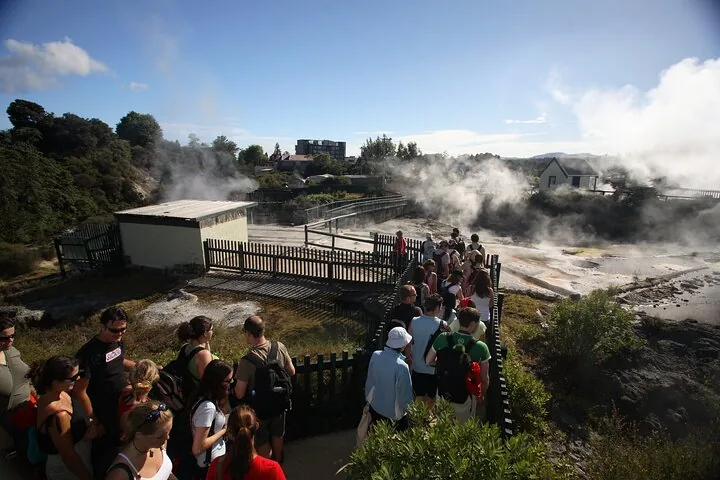
The meal, and the walk back. Buffet at Mitai and Te Puia, plated courses at Te Pā Tū. Mitai closes with a bush walk to a sacred spring and a glow-worm grotto; Te Puia walks you down to Pōhutu Geyser with a hot chocolate; Te Pā Tū ends at the pā. You are usually back at your accommodation by about half past nine.
What you are expected to do
More than you might expect, and less than you might fear.
You will need to let your group pick a chief, stand still through the wero, and join in a short waiata. You will not be pulled on stage, singled out, or made to perform. There is no version of this evening where you sit through it as a pure spectator, and that is by design — you are being welcomed, and a welcome has two sides.
The practical implications: arrive on time, because the pōwhiri starts the moment the group is assembled, and pay attention on the coach, because that is when you learn the song.
What it costs, and what is included
| Price | Meal | Transport | Ends with | |
|---|---|---|---|---|
| Mitai | $103 | Hāngī buffet + dessert | Courtesy transfers, limited | Glow worms |
| Te Puia Te Pō | $124 | Hāngī buffet incl. kai moana | Not included, free parking | Pōhutu Geyser after dark |
| Te Pā Tū | $170 | Plated seasonal menu | Return transport included | The pā |
There is also a daytime version. Voyages of Māori at Mitai runs the same waka, performance and hāngī as a two-hour lunch for $85 — no glow worms, since there is nothing to see in daylight, but it frees your evening and costs less. Our guide to how a dinner package compares with a show-only ticket lists every daytime and evening option side by side.
Alcoholic drinks are excluded everywhere and available to purchase. Tea and coffee are included at Mitai and Te Puia. Gratuities are not included at any of them. Dietary needs differ by venue: Te Pā Tū’s vegetarian option must be requested when you book, Te Puia’s buffet labels its vegetarian, vegan and gluten-free dishes, and Mitai says some dietary requests can be met but it cannot cater for every need, vegan included. Our guide to hāngī food covers the menus in more detail.
Practical things worth knowing
Book the date early. Sittings are capped by coach and table capacity and sell out days ahead over summer. Every option here cancels free, so there is no cost to reserving and changing your mind.
Check your transport line. Te Pā Tū includes return transport from a central meeting point. Mitai’s courtesy transfers have limited places. Te Puia has no pickup on this ticket but free parking at the entrance on Hemo Road. The three venues sit on different roads out of town, so this is not a detail to sort out on the night.
Dress for outdoors. Parts of every evening are outside, and Rotorua evenings cool off quickly. Mitai’s closing walk is through forest with steps and uneven ground.
Accessibility varies. Te Pā Tū and Te Puia both state venue and transport are wheelchair accessible; Te Pā Tū can carry collapsible wheelchairs with removable wheels if the passenger travels with someone who can assist. Mitai is the exception: the bush walk exits via stairs and wheelchair users will not see the glow worms.
Frequently Asked Questions
How much is a Rotorua hāngī dinner and concert?
From $103 at Mitai, $124 at Te Puia’s Te Pō, and $170 at Te Pā Tū. Mitai’s daytime version is $85. All include the performance and the meal; only Te Pā Tū includes return transport as standard.
Which one lets you see the hāngī lifted from the pit?
Mitai, and only Mitai. The pit is opened and the baskets lifted in front of guests before the buffet. Te Puia cooks traditionally but serves straight to the restaurant, and Te Pā Tū serves plated courses.
What food is served at a hāngī?
Meat — chicken, lamb or pork — with kūmara, potato and cabbage cooked in the pit, plus salads and sides, then a steamed pudding. Te Puia’s buffet adds kai moana, seafood. The texture is steamed rather than roasted, and it is dense and mild rather than smoky.
Do I have to join in?
Partly, yes. Your group chooses someone to accept the challenge, everyone stands silent through the wero, and the group sings a waiata back to the hosts — you are taught one on the coach. You will not be brought on stage.
How long does the evening take?
About three hours at all three operators, plus transfer time. Most guests are back at their accommodation by around 9.30pm.
Can children come?
Yes. All three state the experience is suitable for all fitness levels, prams are fine and infant seats are available on the transported evenings. Two warnings: the wero is deliberately intimidating and can startle young children, and Mitai’s closing bush walk has steps and uneven ground.
Pick Your Format, Then Your Evening
A village walk, a geothermal visit, an evening pōwhiri and hāngī, or a day on the land with an iwi guide — thirteen experiences compared, with free cancellation on every one.
Check Availability & Book