Rotorua Māori Experience Cancellation Policies: What to Check Before Booking
Cancellation rules differ by operator and by booking platform. What to check before you pay for a Rotorua Māori experience, and what happens if you're delayed, unwell or it rains.
Cancellation policies for Rotorua Māori experiences vary considerably, so don’t assume every ticket offers free cancellation until 24 hours before your visit. As of September 2026, the major Rotorua operators use different rules, and tickets bought through third-party platforms can carry different conditions from direct bookings. Always read the terms attached to the exact ticket you’re buying.
Check Availability

Te Pā Tū: Māori Cultural Experience & Seasonal Feast
- 4.8/5 (1,703 reviews)
- 3 hours
- Free cancellation
- Operated by Te Pa Tu - The Gathering Place
Includes Traditional welcome ceremony · Māori fusion feast · In-vehicle air conditioning
You'll choose your date and complete the booking on Viator. Reserve now, pay later on most departures.
What to check first
Before paying, identify:
- free-cancellation deadline
- refund after the deadline
- date-change policy
- no-show policy
- operator-cancellation policy
Save this information with your booking confirmation.
Why policies can look different
An attraction may have separate terms for:
- individual tickets
- group bookings
- meals
- packages
- special events
- promotions
- third-party sales
An older PDF can also differ from the current booking engine.
Other Experiences
Other experiences you might enjoy
More ways to experience Māori culture in Rotorua — all bookable with free cancellation.

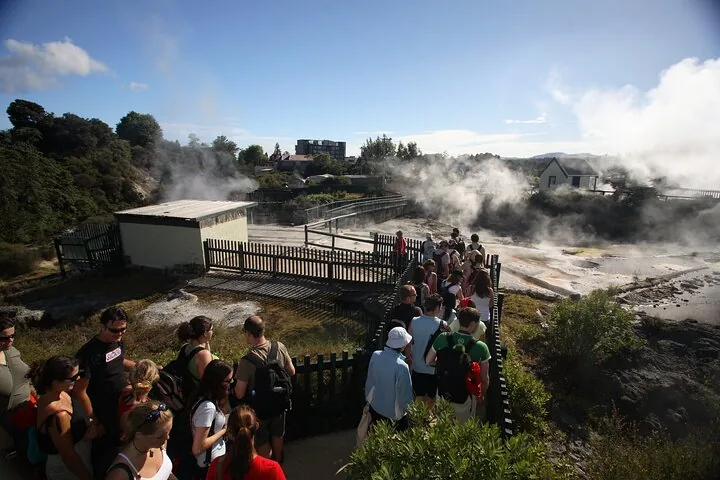
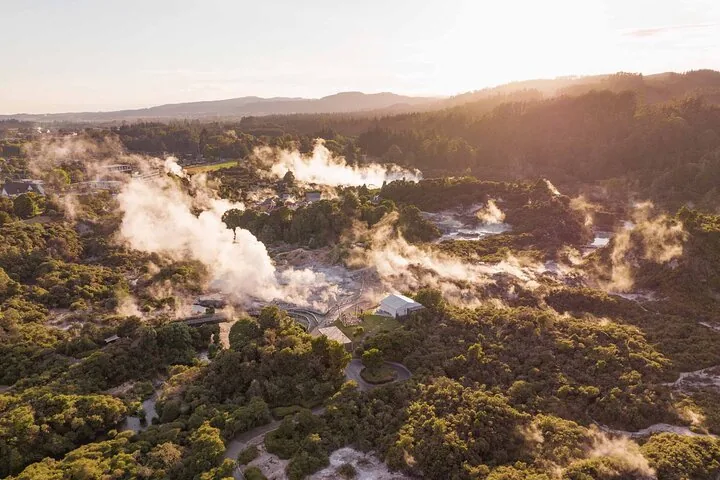
Mitai Māori Village
Mitai’s published direct-booking policy has generally been structured around:
- full refund when cancelled sufficiently early
- partial refund closer to the visit
- no refund at very short notice or for no-shows
The exact current cutoff should always be checked at booking because policies can change. If Mitai cancels an experience itself, it normally offers rescheduling or a refund according to its terms.
Te Puia
Te Puia also uses notice periods for cancellations and amendments, with stricter conditions applying closer to the experience. Large groups can have different deadlines.
If you booked Te Puia directly, follow the contact method shown in your confirmation instead of assuming there will be a one-click cancellation button.
Whakarewarewa
Whakarewarewa’s current product pages and other published materials haven’t always expressed cancellation wording in exactly the same way. For that reason, use the terms shown at checkout and on your booking confirmation as the controlling information for your ticket.
If the wording is unclear, ask the attraction before booking.
Does booking through Viator or another platform change the policy?
It can. A platform may offer:
- free cancellation to a stated deadline
- reserve-now-pay-later
- non-refundable discounts
- its own customer-service process
- different currency terms
If you book through a third party, follow the cancellation conditions attached to that booking.
The listings this site links to show how much this varies. At the time of writing, twelve of the thirteen experiences we track carry free cancellation on Viator, including Te Pā Tū, the Mitai evening experience, Te Puia Te Rā and the Whakarewarewa village tour. The exception is the Te Puia Te Pō Combo, which is listed as all sales final. At $176, it is the ticket to be most sure about before you pay. The wording on each listing can change, so confirm it on the booking page.
Flexible vs non-refundable tickets
A non-refundable ticket can make sense when:
- your date is fixed
- the saving is meaningful
- transport and accommodation are already confirmed
Flexible cancellation is more useful when:
- you are on a road trip
- your itinerary may change
- you have young children
- transport plans are uncertain
- you are travelling a long distance before Rotorua
A slightly higher flexible price can be better value than losing a cheaper non-refundable ticket. If your dates are still moving, our guide to booking a Rotorua Māori experience in advance covers how to reserve without locking yourself in.
What does “48 hours before” mean?
It usually means the exact number of hours before the scheduled start. If your experience begins at 6 pm Friday, a 48-hour cutoff normally falls around 6 pm Wednesday.
Don’t confuse “two calendar days before” with the precise cancellation deadline.
What if your flight is delayed?
Travel disruption doesn’t automatically guarantee a refund. If you know you may miss the experience:
- contact the operator immediately
- ask whether the booking can be moved
- check your travel insurance
- keep evidence of the disruption
The earlier you contact the operator, the more options you may have.
What if your rental car breaks down?
Same principle: contact the operator as soon as possible and ask whether a date or time change is possible.
What if you are sick?
Illness doesn’t automatically override the attraction’s terms. Travel insurance may cover some missed prepaid activities when the reason meets the policy conditions.
What if it rains?
Ordinary rain usually does not mean a Rotorua cultural experience is cancelled. Many programmes have both indoor and outdoor components and operate in normal Rotorua weather.
Don’t cancel independently because of a poor forecast unless you’re prepared to accept the cancellation penalty.
Severe weather
If the operator cancels because of safety or severe weather, its own cancellation provisions normally apply. That is very different from deciding yourself not to attend because rain is forecast.
Are no-shows refundable?
Usually not. Missing the experience can result in loss of the ticket value, which is why arrival instructions matter as much as cancellation terms. Our meeting points and transport guide covers where to be and how early.
Groups
Group bookings can have:
- longer notice periods
- different deposit rules
- catering conditions
- transport conditions
If you’re booking for 10 or more people, read the group terms separately.
Hāngī dinner bookings
Meal-inclusive tickets may have stricter conditions because food is prepared in advance. Check:
- cancellation cutoff
- dietary-request cutoff
- no-show policy
- date-change policy
Can you get a refund if you leave early?
Normally, no. Once you’ve checked in and started the experience, leaving early doesn’t usually create an automatic right to a partial refund.
Currency and refunds
If you pay in another currency, the refund you receive in your home currency may differ slightly because of:
- exchange-rate changes
- bank conversion
- card-provider fees
Travel insurance
Travel insurance isn’t usually worth buying solely for one Rotorua activity, but it can protect the broader trip. Depending on the policy, it may cover prepaid activities missed because of:
- illness
- serious travel disruption
- emergency
- covered transport cancellation
Read the policy carefully.
Direct vs third-party cancellation
| Factor | Direct booking | Third-party platform |
|---|---|---|
| Terms | Operator rules | Platform/product rules |
| Date changes | Contact operator | Often managed through platform |
| Refund processing | Operator/payment provider | Platform/payment system |
| Hotel pickup changes | Usually easier directly | May require operator contact |
| Flexibility | Depends on product | Often clearly displayed |
Neither route is automatically better.
Common mistakes
- assuming all tours have 24-hour free cancellation
- cancelling one calendar day before a 48-hour cutoff
- contacting the wrong company
- assuming rain means cancellation
- ignoring group rules
- missing the experience and expecting a refund
- arriving late
- saving the price but not the cancellation terms
Final answer
Rotorua Māori experience cancellation policies are not standardised. Before you pay, check the exact cancellation deadline and save it.
If your New Zealand itinerary is still flexible, a refundable ticket can be worth a small premium. If your plans change, contact the operator or booking platform immediately instead of waiting until the deadline is almost gone.
Pick Your Format, Then Your Evening
A village walk, a geothermal visit, an evening pōwhiri and hāngī, or a day on the land with an iwi guide — thirteen experiences compared, with free cancellation on every one.
Check Availability & Book