Rotorua Māori Experience With Dinner vs Cultural Show Only: What Each Ticket Includes
A show-only ticket in Rotorua runs 30–40 minutes from $21; a hāngī evening runs about three hours from $103. What each format adds, venue by venue, and when you can skip dinner.
The cheapest way to see haka in Rotorua is a 30–40 minute performance at Whakarewarewa for about $21, and you need no dinner booking to do it. A dinner evening at Mitai, Te Pā Tū or Te Puia takes about three hours and costs $103 to $170, and the extra money buys far more than food: a formal welcome, longer storytelling, waka, forest or geothermal settings after dark, and at one venue the ride there and back. This guide lists what each format adds, component by component, so you can see which parts you would miss by booking a show only.
Check Availability
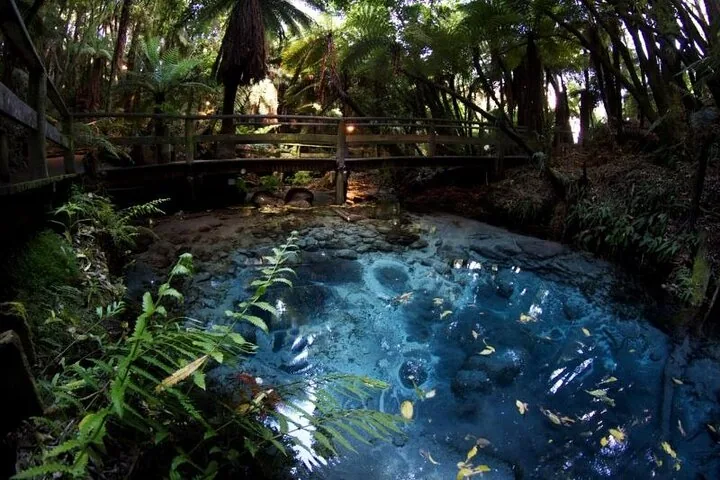
Mitai Māori Village Cultural Experience in Rotorua
- 4.6/5 (1,442 reviews)
- 3 hours
- Free cancellation
- Operated by Mitai Maori Village
Includes Hangi served from a buffet alongside other side dishes and dessert · Courtesy transfers from local accommodation …
You'll choose your date and complete the booking on Viator. Reserve now, pay later on most departures.
Show only vs dinner: the quick comparison
| Feature | Short cultural experience | Hāngī dinner experience |
|---|---|---|
| Haka | Usually | Usually |
| Waiata / poi | Common | Common |
| Cultural storytelling | Varies | Usually more extensive |
| Hāngī or feast | No, unless the listing says so | Yes (plated courses at Te Pā Tū) |
| Waka | Venue-dependent (Mitai) | Venue-dependent (Mitai) |
| Village element | Sometimes | Often |
| Geothermal element | Venue-dependent | Included at Te Puia |
| Typical duration | 30–40 minutes to about 1.5 hours | About 2.5–3 hours |
| Price on Viator | From $21 | From $103 |
| Best fit | Busy itinerary or lower budget | A complete evening |
The 4.5-hour figure you may see for Te Puia applies only to the Te Pō combo ($176), which adds the daytime guided tour to the evening.
Other Experiences
Other experiences you might enjoy
More ways to experience Māori culture in Rotorua — all bookable with free cancellation.
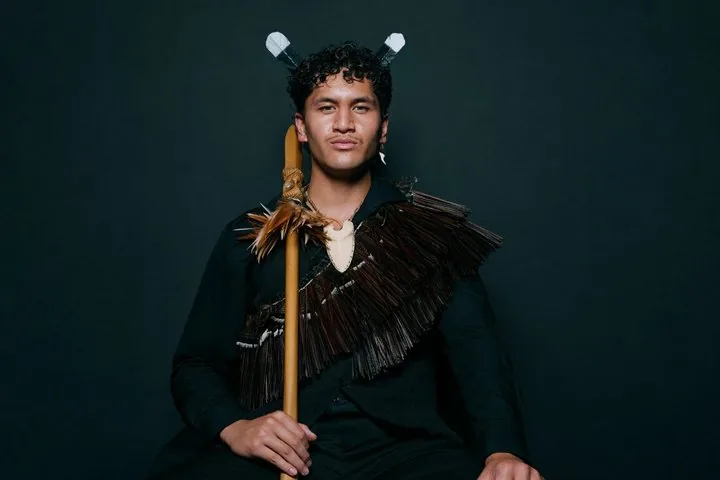
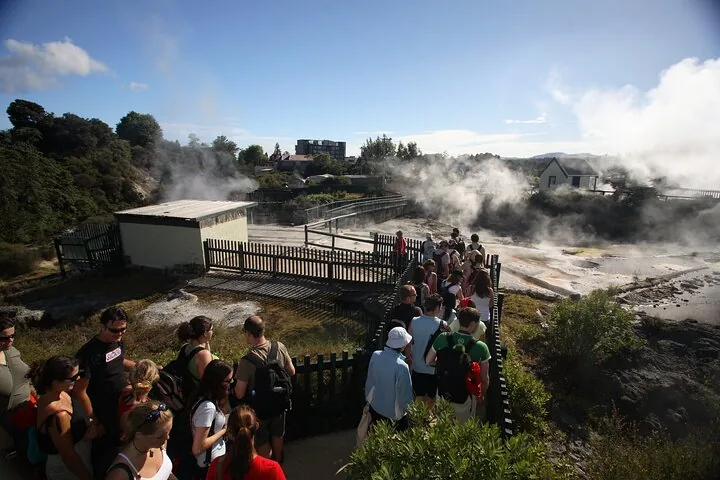
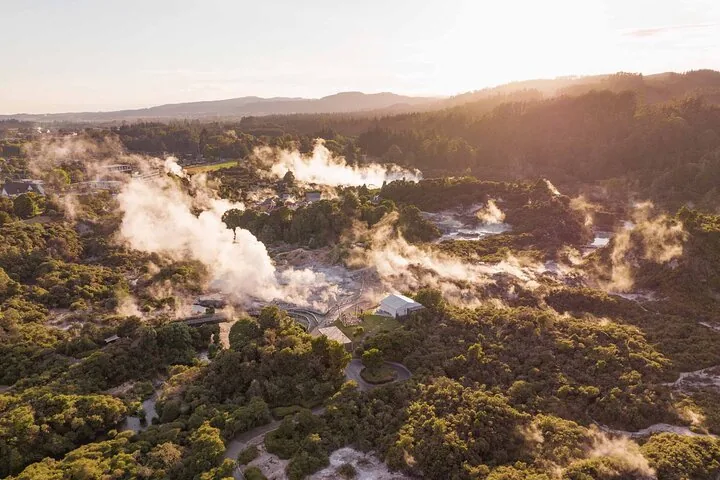
What is a cultural-show-only experience?
At its simplest, a cultural performance focuses on Māori performing arts. In 30–40 minutes you may see:
- haka
- waiata (song)
- poi
- tī rākau (stick games)
- chants
- stories told through movement and song
The Cultural Performance at Whakarewarewa ($21, 4.6/5 from 38 reviews, a small sample) is the classic short format, performed by the people of the living village. Our breakdown of the Whakarewarewa performance covers the timings, and the cultural performance guide explains each item you will see.
Do you need dinner to see haka?
No. Every short cultural ticket in Rotorua includes haka. If haka is your main interest, you do not need the dinner package.
What does the full dinner add?
Depending on the venue, an evening ticket adds:
- a formal welcome
- longer storytelling
- an explanation of the hāngī and how it is cooked
- dinner: a hāngī buffet at Mitai and Te Puia, plated seasonal courses at Te Pā Tū
- waka (Mitai)
- a forest walk (Mitai) or a forest pā setting (Te Pā Tū)
- geothermal scenery after dark (Te Puia)
- return transport (Te Pā Tū only)
Transport is the line people assume and should check. Only Te Pā Tū includes return transport from a central Rotorua meeting point. Mitai offers courtesy transfers from Rotorua accommodation with limited places, and at Te Puia you make your own way to the venue. The meeting points and transport guide lists each pickup.
Whakarewarewa options
Whakarewarewa lets you build the visit in layers, none of which includes a meal on Viator:
- Cultural performance: Cultural Performance at Whakarewarewa, $21, 30–40 minutes.
- Guided living-village tour: Whakarewarewa Village Guided Tour, $33, about an hour, 4.7/5 from 539 reviews.
- Geothermal trails plus the village tour: Whaka Trails and Māori Village Combo Tour, $53, 1–3 hours, 4.7/5 from 199 reviews.
- All-day pass: sold on whakarewarewa.com, with no separate Viator listing. The trails-and-village combo above is the closest bookable ticket.
That makes Whakarewarewa the venue to pick if you want cultural content without a dinner-show format. Our Whakarewarewa vs Te Puia comparison sets the two daytime venues side by side.
Mitai: the dinner format and the daytime version
Mitai dinner format
The Mitai Māori Village Cultural Experience ($103, about three hours, 4.6/5 from 1,442 reviews) is a full cultural programme with the dinner as one part of it. It combines:
- a welcome
- hāngī served from a buffet with side dishes and dessert
- warriors arriving by waka on the stream
- cultural performance
- storytelling
- a short guided bush walk
- the old village site and sacred spring
- glow worms after dark
Mitai’s own site states that every evening experience includes a hāngī dinner, so the meal is part of the ticket.
Does Mitai have a shorter option?
Yes, by day. Voyages of Māori at Mitai Māori Village ($85, two hours, 4.8/5 from 96 reviews) runs the waka, the sacred spring walk and a performance with haka and poi, and Mitai serves the hāngī as lunch. It drops the glow worms and the evening. We found no Mitai ticket on Viator that leaves the meal out altogether.
The daytime version suits you if:
- you already have dinner plans
- you want a lower price than the evening
- you are in Rotorua during the day only
- your children may struggle with a long evening
Te Puia: evening and daytime
Te Puia Te Pō
The Te Puia Te Pō evening experience ($124, about three hours, 4.7/5 from 120 reviews) combines:
- a traditional welcome
- a full hāngī buffet dinner
- a 45-minute cultural performance with haka
- the geothermal valley after dark
- hot chocolate on the terrace facing Pōhutu Geyser
Its main difference from Mitai is the landscape around the programme: geysers and steam in place of forest and stream.
Te Puia daytime alternative
Te Puia also sells daytime tickets with guided geothermal sightseeing and no dinner. The Te Rā guided experience ($64, 1.5 hours, 4.5/5 from 380 reviews) covers the geysers, the Kiwi Conservation Centre, the carving and weaving schools and the marae. Te Rā plus haka ($86, two hours, 4.9/5 from 40 reviews, still a small sample) adds a haka performance.
What are you paying extra for?
More time
A short show runs 30–40 minutes. A full evening takes about three hours. Our duration guide breaks down what each length covers.
Food
Dinner replaces your evening meal, which narrows the real gap between a $21 show and a $103 evening once you subtract what dinner in town would have cost you.
More cultural context
Longer programmes give more explanation and storytelling between the performance items.
Extra attractions
The additions vary by venue: waka and glow worms at Mitai, a forest pā at Te Pā Tū, geysers at Te Puia.
Night-time atmosphere
Darkness changes the mood of a forest or a steaming geothermal valley.
The prices guide lists what every ticket includes at each price point.
Show only or dinner: advantages and trade-offs
Advantages of the short cultural option
- lower price
- less time
- easier for day-trippers
- easier with young children
- you choose your own restaurant
- fits into a crowded itinerary
What you may miss
Depending on the venue:
- hāngī
- waka
- a village tour
- forest
- a geothermal evening
- longer storytelling
- carving and weaving demonstrations
Advantages of the dinner experience
- a complete evening
- hāngī
- more cultural context
- more variety
- an efficient use of your evening
- one booking covers the activity and the meal
Potential downsides
- higher price
- a three-hour commitment
- a buffet may not be your priority
- dietary planning
- young children may tire
Is the hāngī worth the extra cost?
It is better value if you want to taste traditional earth-oven food and would otherwise pay for dinner anyway. Our guide to hāngī dinner food describes what goes on the plate.
It matters less if:
- you already have dinner reservations
- food is not a priority
- you have complex dietary needs
- you mainly want haka
Dietary requirements
Diet matters most with food-inclusive tickets. If you are vegan, vegetarian, gluten-free or managing allergies, check the exact menu with the venue before paying extra for dinner.
Matching the format to your time in Rotorua
One-day visit
If you stay the night, a hāngī dinner uses the evening well after a day of sightseeing. If you leave Rotorua in the afternoon, book a daytime cultural ticket instead, such as the Whakarewarewa village tour or Mitai’s daytime voyage.
Half-day visit
A 30–90 minute cultural performance or guided tour usually fits better than a three-hour evening.
Families
Younger children: shorter daytime options are usually easier.
Older children: full evenings can work well, because the programme moves between performance, food and outdoor sections.
Choosing by what you want most
If you mainly want haka
Book a cultural-performance ticket, such as the $21 Whakarewarewa show.
If you want Māori food
Book a hāngī buffet at Mitai or Te Puia Te Pō, Te Pā Tū’s plated seasonal feast, or Mitai’s daytime voyage for hāngī at lunch.
If you want geothermal scenery
Look at Te Puia and Whakarewarewa.
If you want living-village context
Book Whakarewarewa, because people live there.
If you want waka and forest
Mitai is the venue with both.
If you are still weighing venues, which Rotorua Māori experience is right for you sorts all thirteen tours by format, and Te Pā Tū vs Mitai vs Te Puia compares the three evenings.
Think of the options as a spectrum
Shortest
A standalone performance, 30–40 minutes.
Short cultural experience
Performance plus storytelling.
Village combination
Guided village, performance and geothermal context.
Dinner experience
Culture, performance and hāngī.
Full combination
A guided daytime attraction plus dinner, performance and geothermal or forest settings, such as the 4.5-hour Te Pō combo.
Frequently Asked Questions
Is dinner more “authentic”?
No. Food has no bearing on whether an experience is culturally meaningful. A shorter performance is still presented by Māori hosts and still carries important stories. A longer ticket means more components and more time.
Can I see a haka in Rotorua without booking dinner?
Yes. The 30–40 minute performance at Whakarewarewa, the Te Rā plus haka ticket at Te Puia and Mitai’s daytime voyage all include haka without an evening meal. If you are new to the whole idea, our first-time visitor’s guide explains what a Māori cultural experience covers.
Does the dinner ticket include hotel transport?
Only at Te Pā Tū, which includes return transport from a central Rotorua meeting point. Mitai has courtesy transfers with limited places, and Te Puia Te Pō has none.
Is there a Mitai ticket without the hāngī?
Not on Viator. Mitai’s evening includes hāngī dinner and its two-hour daytime programme includes hāngī lunch.
So should I book dinner or the show only?
Book the show only when you mainly want the performance, flexibility and a lower cost. Book a dinner evening when you want culture to fill the evening, with food, setting and extra activities around the performance. Ask yourself whether you want the extra food, time, setting and cultural components, because you can see haka either way.
Pick Your Format, Then Your Evening
A village walk, a geothermal visit, an evening pōwhiri and hāngī, or a day on the land with an iwi guide — thirteen experiences compared, with free cancellation on every one.
Check Availability & Book