Te Pā Tū vs Mitai vs Te Puia
The three big Rotorua evening experiences compared — price, what the meal actually is, who lifts the hāngī from the pit, transport, and which suits which traveller.
Three operators run the big evening Māori experience in Rotorua, and between them they hold almost all the reviews in the niche: Te Pā Tū with 1,703, Mitai with 1,442, Te Puia’s Te Pō with 120. The shape of the evening is broadly the same at all three — welcome, concert, meal. What differs is the meal, the setting, and about $70 a head.
Check Availability
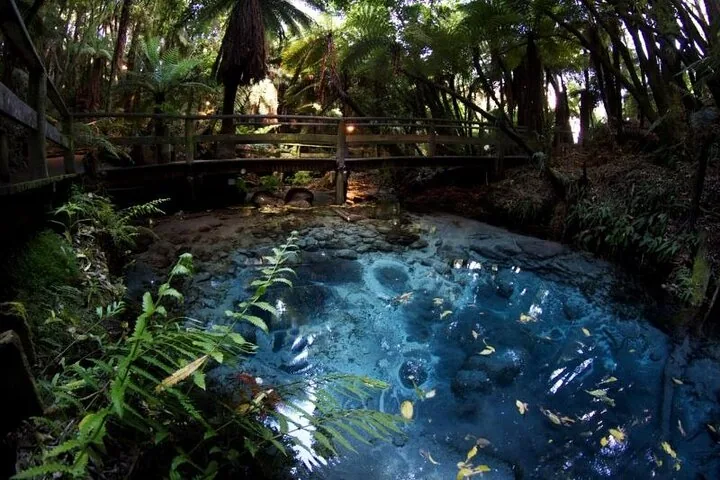
Mitai Māori Village Cultural Experience in Rotorua
- 4.6/5 (1,442 reviews)
- 3 hours
- Free cancellation
- Operated by Mitai Maori Village
Includes Hangi served from a buffet alongside other side dishes and dessert · Courtesy transfers from local accommodation …
You'll choose your date and complete the booking on Viator. Reserve now, pay later on most departures.
The one difference that decides it for most people
Only Mitai opens the hāngī pit in front of guests and lifts the baskets out of the ground. The food is cooked on stones under earth for hours, and at the end of the evening the covering comes off and the baskets come up steaming, in front of you, before the buffet is served.
Te Puia cooks the same way and serves it straight to the buffet at the Pātaka Kai restaurant. Te Pā Tū serves plated seasonal courses. Both are hāngī. Neither is a hāngī you watch.
If “food cooked in the ground” is the phrase that made you book, that single fact narrows three options to one, and it is worth knowing before rather than after. If the ceremony matters less to you than the food or the setting, read on — the other two have real advantages.
Side by side
| Te Pā Tū | Mitai | Te Puia Te Pō | |
|---|---|---|---|
| Price from | $170 | $103 | $124 |
| Rating | 4.8 (1,703 reviews) | 4.6 (1,442 reviews) | 4.7 (120 reviews) |
| Length | 3 hours | 3 hours | 3 hours |
| The meal | Plated seasonal menu | Hāngī buffet + dessert | Full hāngī buffet |
| Hāngī lifted in front of you | ✗ | ✓ | ✗ |
| Setting | Forest pā, bonfires, natural amphitheatre | Bush and stream, Wai-o-Whiro | Active geothermal valley |
| The extra thing | Menu follows the maramataka | Waka taua on the stream; glow worms | Pōhutu Geyser after dark, hot chocolate |
| Transport | Return transport included | Courtesy transfers, limited places | Not included |
| Free cancellation | ✓ | ✓ | ✓ |
Other Experiences
Other experiences you might enjoy
More ways to experience Māori culture in Rotorua — all bookable with free cancellation.
Te Pā Tū — $170
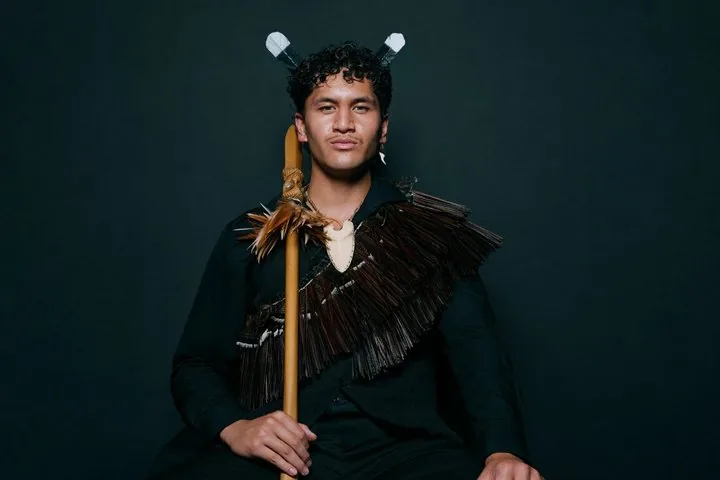
The former Tamaki Māori Village, and the most-reviewed Māori cultural experience in Rotorua by a wide margin. The evening runs in a forest pā under tawa trees with bonfires and an amphitheatre formed by the landscape rather than built into it.
Its distinguishing feature is the maramataka, the Māori lunar calendar: both the menu and the waiata change with the season, so this is the one operator where two visits a year apart are genuinely different evenings. The food is plated courses, not a buffet, which is the right choice if a buffet queue would spoil the evening for you and the wrong one if you wanted volume.
Return transport from a central meeting point is included, the vehicles are air-conditioned, and photography and video are welcome throughout. A vegetarian option is available but must be requested at booking, not on the night.
Book it if: you want the fullest, most produced evening and the highest ratings, and you are not attached to seeing the pit opened. Check dates and prices.
Mitai — $103
The best value of the three, and the one people describe most vividly afterwards. The evening opens with warriors paddling a waka taua down the Wai-o-Whiro stream — which is a genuinely striking thing to watch from the bank — runs through wero, pōwhiri, waiata, poi and haka, and then lifts the hāngī.
It closes with a short guided bush walk to a sacred natural spring and a glow-worm grotto. That walk is included, not an extra, and it is the reason Mitai’s evening feels less like a venue and more like a place.
Two practical notes. The walk has steps and uneven ground, and wheelchair accessibility is limited on that section specifically: the forest exit is via stairs, the waka is viewed from a platform, and wheelchair users will not see the glow worms. And the courtesy transfers from Rotorua accommodation have limited places, so book one early or plan to drive — there is a car park on site with room for motorhomes.
Book it if: you want to see the hāngī lifted, you like the idea of finishing in the bush rather than at a table, or you are watching the budget. Check dates and prices.
Te Puia Te Pō — $124
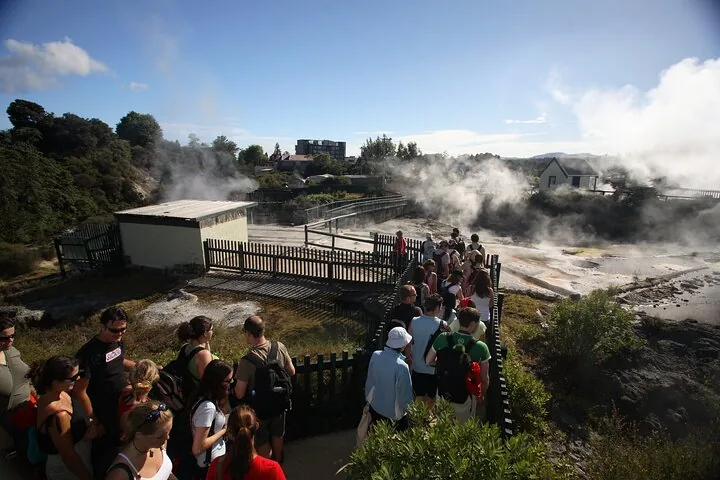
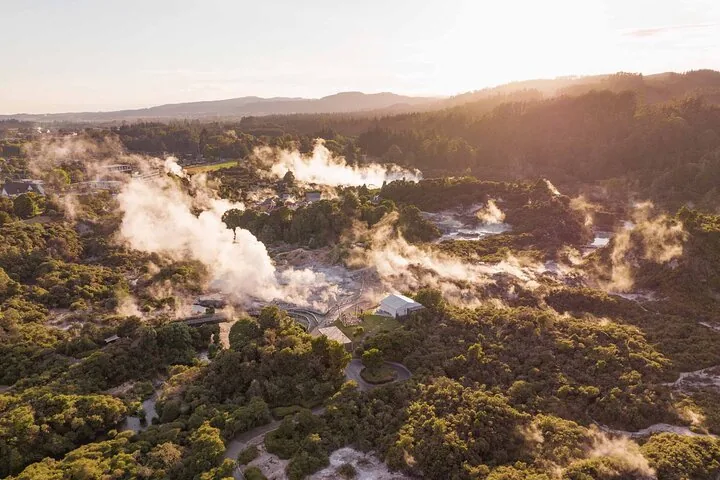
The only evening that happens inside an active geothermal field. The performance is held in Te Aronui a Rua, Te Puia’s carved meeting house — pōhiri, waiata, mōteatea, poi and haka, about forty-five minutes — and the hāngī buffet is served at the Pātaka Kai restaurant, which overlooks the valley. The buffet includes kai moana, seafood, which the other two do not.
Then you walk down to Pōhutu Geyser, the largest active geyser in the southern hemisphere, and are given a hot chocolate on the geyser terrace. Seeing it steaming and lit after dark is the thing this evening has that no other does.
It is the least-reviewed of the three at 120 reviews, which reflects how recently it has been sold in this form rather than any weakness — it rates 4.7. Transport is not included, but Te Puia’s car park is free and directly at the main entrance on Hemo Road.
Book it if: the geothermal landscape is as much of a draw as the culture, or you are already visiting Te Puia by day and want to see the same ground transformed. Check dates and prices.
What all three have in common
You will take part. Each of these is structured as a pōwhiri, so your group chooses someone to accept the wero, everyone stands still through the challenge, and the group sings something back. Guides teach a simple waiata on the way in. Nobody is pulled on stage, but there is no version of this where you sit passively for three hours.
All three are suitable for all fitness levels, allow prams and infant seats, and take cameras throughout. All three cancel free. And all three cap capacity by coach and table, so summer dates go days ahead.
Frequently Asked Questions
Which is the best value?
Mitai, clearly — $103 for a three-hour evening that includes the waka, the full concert, the hāngī lifted in front of you, a buffet with dessert, and the glow-worm walk. Te Pā Tū costs $67 more for a more produced evening and a plated seasonal menu; whether that is worth it depends on how much the production matters to you.
Which has the best food?
They are different rather than ranked. Te Puia’s buffet is the largest and the only one including kai moana. Mitai’s is a classic hāngī buffet with dessert. Te Pā Tū’s is plated seasonal courses and changes through the year, so it is the most interesting and the least generous in volume.
Can I get a vegetarian meal?
At all three, but request it when you book rather than on the night — Te Pā Tū states this explicitly and the others operate the same way. Advance notice is what makes it possible.
Is Te Pā Tū the same as Tamaki Māori Village?
Yes. Te Pā Tū is how the operator formerly known as Tamaki Māori Village now styles itself, and its own site describes it that way. Older guidebooks and blog posts recommending Tamaki are describing this experience, though the format has been substantially reworked since.
Do I need a car?
Only for Te Puia. Te Pā Tū includes return transport from a central meeting point, and Mitai runs courtesy transfers from Rotorua accommodation, though places are limited. Te Puia has free parking at the entrance but no pickup on this ticket.
Pick Your Format, Then Your Evening
A village walk, a geothermal visit, an evening pōwhiri and hāngī, or a day on the land with an iwi guide — thirteen experiences compared, with free cancellation on every one.
Check Availability & Book