Whakarewarewa vs Te Puia
Same geothermal valley, two separate organisations, two entrances and a bolted gate. What each ticket actually buys, and why one ticket never covers both.
This is the most common mix-up in Rotorua, and it catches people at the gate. Whakarewarewa and Te Puia occupy the same geothermal valley, share a name in ordinary speech, and were once a single entity. They are now two separate organisations with two separate entrances and a bolted gate between them, and one ticket does not admit you to the other.
Check Availability
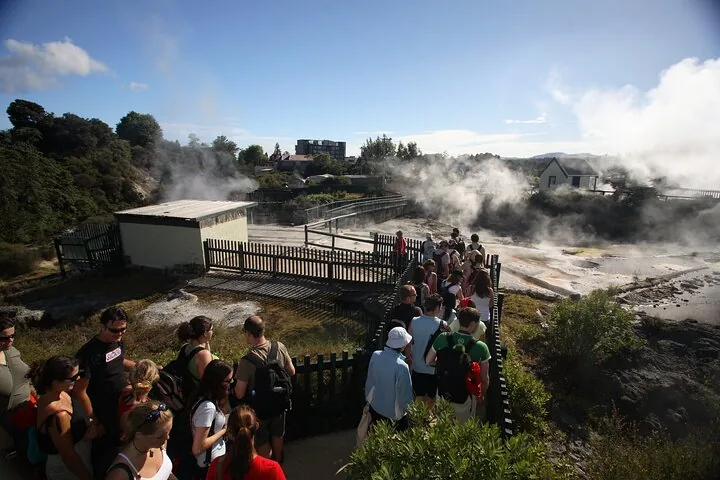
Whakarewarewa Village Guided Tour — The Living Māori Village
- 4.7/5 (539 reviews)
- 1 hour
- Free cancellation
- Operated by Whakarewarewa, The Living Maori Village
Includes Entry Ticket
You'll choose your date and complete the booking on Viator. Reserve now, pay later on most departures.
The practical difference, in one paragraph
Whakarewarewa — The Living Māori Village is at 17 Tryon Street. It is a residential village: Tūhourangi Ngāti Wāhiao families live there and use the geothermal vents and pools for cooking and bathing. You are walking through a neighbourhood.
Te Puia is at 20 Hemo Road. It is a 60-hectare cultural centre built around Pōhutu Geyser and the New Zealand Māori Arts and Crafts Institute, the national school where carving and weaving are taught. You are walking through an institution.
Both are excellent. They are not interchangeable, and if you only do one you should know which question you were answering.
Side by side
| Whakarewarewa | Te Puia | |
|---|---|---|
| Address | 17 Tryon Street | 20 Hemo Road |
| What it is | A village people live in | A cultural centre and arts institute |
| Site | Residential, compact | 60 hectares |
| Entry from | $21 (performance only) · $33 (guided tour) | $64 (Te Rā guided) |
| Guided tour length | About 1 hour | 90 minutes |
| Pōhutu Geyser | Seen across the valley | Up close |
| Carving & weaving schools | ✗ | ✓ New Zealand Māori Arts and Crafts Institute |
| Kiwi conservation centre | ✗ | ✓ |
| Geothermal in domestic use | ✓ Cooking vents, bathing pools | Shown, not lived in |
| Evening option | ✗ | ✓ Te Pō, $124 |
| Reviews | 539 on the guided tour | 380 on Te Rā |
| Wheelchair access | All areas and surfaces stated accessible | Venue and transport stated accessible |
Other Experiences
Other experiences you might enjoy
More ways to experience Māori culture in Rotorua — all bookable with free cancellation.
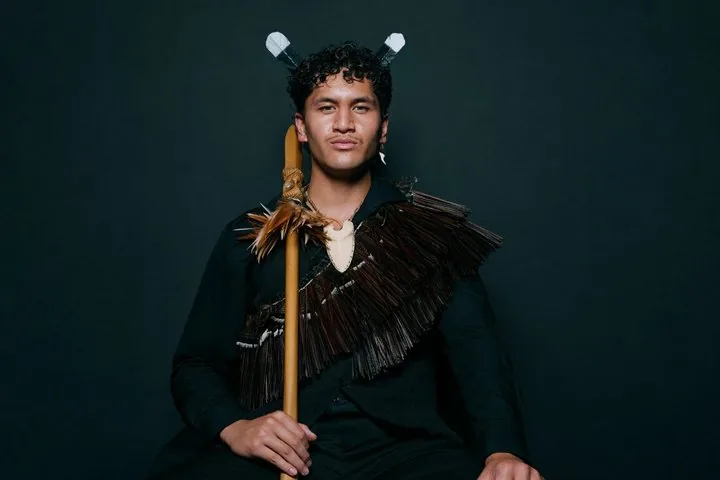
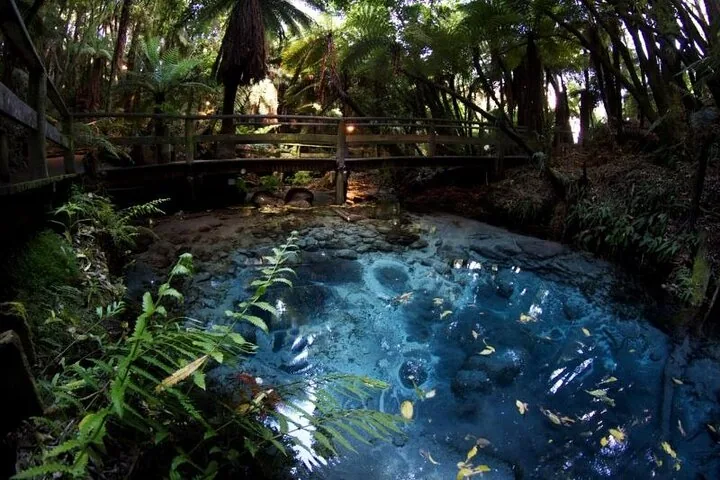
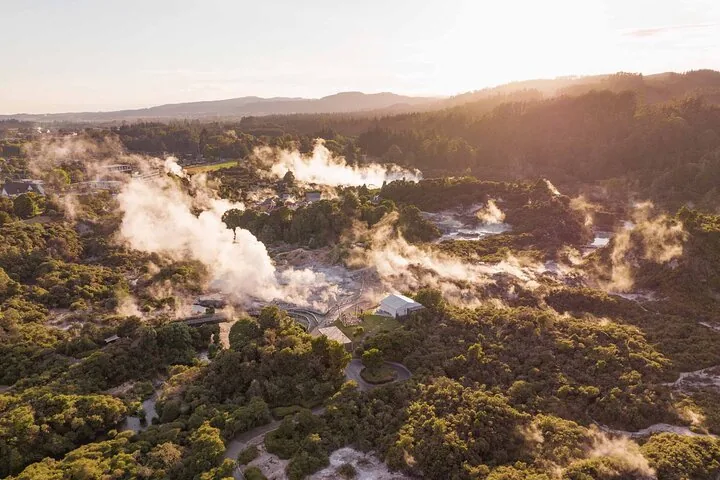
Whakarewarewa: a village, not an exhibit
The guided village tour costs $33 and runs about an hour. What makes it unusual is not the geothermal activity — Rotorua has plenty — but that you are being shown a functioning community by people whose families are part of it. The guides are direct descendants of the early Whakarewarewa guides whose work shaped New Zealand tourism a century ago, and the tour is framed around present-tense daily life: which pool is used for what, how the cooking vents work, what living on this ground means in practice.
Two other tickets are worth knowing about. The cultural performance is sold separately at $21 for thirty to forty minutes, performed by Tūhourangi Ngāti Wāhiao themselves — the cheapest genuine Māori experience in Rotorua. And the combo with the geothermal trails at $53 adds a self-paced walk through mud pools and steaming lakes on trails that opened in December 2021, plus corn on the cob cooked in the village’s own hot pool, which is the single clearest demonstration of what geothermal living actually means.
Choose Whakarewarewa if you want to understand how people live here, you are on a budget, or you have already seen a geothermal park elsewhere in the region and want something a park cannot give you.
Te Puia: geysers and the national arts schools
The Te Rā guided experience is $64 for ninety minutes and covers the geothermal valley, Pōhutu Geyser — the largest active geyser in the southern hemisphere — the Kiwi Conservation Centre, and the carving and weaving schools of the New Zealand Māori Arts and Crafts Institute. Guides are kaiārahi who attach ancestral stories to the ground you are standing on.
The carving school is the thing that makes Te Puia difficult to substitute. Watching wood, bone and greenstone being worked by students in a teaching institution is a different experience from seeing finished carving on a meeting house, and it is why the Institute exists on this site at all.
For $86 the Te Rā + Haka combo adds a full cultural performance in the carved meeting house Te Aronui a Rua. That ticket rates 4.9, the highest of any experience on this site, and it is the cheapest way to combine a geothermal valley and a full haka in daylight. Te Puia is also the only one of the two with an evening option, Te Pō at $124, which adds a hāngī buffet and a walk to the geyser after dark.
Free parking sits directly at the main entrance on Hemo Road. Food, drinks and hotel pickup are excluded from the daytime tickets. Te Rā is flagged as likely to sell out, which is unusual for a daytime ticket.
Choose Te Puia if you want the geyser up close, you care about carving and weaving as living crafts, or you want one ticket that can also cover your evening.
Can you do both?
Yes, and it works well — they take an hour and ninety minutes respectively, so both fit into one day with room to spare. Just budget two tickets and two entrances. There is no combined pass, no shortcut between the sites, and the gate between them stays bolted.
If you are doing both, the order that reads best is Whakarewarewa first and Te Puia second: the village gives you the human scale and the domestic use of the ground, so the geyser and the carving school land as the public, formal expression of the same thing rather than as a standalone attraction.
Frequently Asked Questions
Is Whakarewarewa the same as Te Puia?
No. They sit in the same geothermal valley and were once a single entity, but today they are separate organisations with separate entrances — Whakarewarewa at 17 Tryon Street, Te Puia at 20 Hemo Road — and a bolted gate between them. Buying a ticket to one does not get you into the other.
Which is cheaper?
Whakarewarewa, substantially. Entry starts at $21 for the performance alone and $33 for the guided village tour, against $64 for Te Puia’s Te Rā experience. The $53 Whakarewarewa combo, which adds the geothermal trails, still comes in under Te Puia’s base ticket.
Which one has Pōhutu Geyser?
Te Puia. Pōhutu is on the Te Puia side of the valley and the Te Rā tour takes you up close to it. Whakarewarewa has views across the valley towards it, which is not the same thing.
Can I see a haka at either?
At both, but they are sold differently. Whakarewarewa sells its cultural performance as a separate $21 ticket. Te Puia bundles a performance into the $86 Te Rā + Haka combo, or into the Te Pō evening.
Which is better for wheelchair users?
Whakarewarewa states that all areas and surfaces are wheelchair accessible, which is the clearest statement of the two. Te Puia states that the venue and the transport options are accessible. Both are good; Whakarewarewa’s wording is the more comprehensive.
Do people really still live at Whakarewarewa?
Yes. It is a working residential village of Tūhourangi Ngāti Wāhiao, and the geothermal vents and pools are in daily domestic use for cooking and bathing. That is the entire point of the visit, and it is what distinguishes it from every other geothermal attraction in the district.
Pick Your Format, Then Your Evening
A village walk, a geothermal visit, an evening pōwhiri and hāngī, or a day on the land with an iwi guide — thirteen experiences compared, with free cancellation on every one.
Check Availability & Book