What Happens at a Rotorua Māori Village Experience?
Whakarewarewa is a village people live in, Mitai is a cultural journey through forest and stream, and Te Puia pairs culture with geysers and carving. What you do at each.
A Rotorua Māori village experience is not a place where you arrive, look around and leave. Depending on the venue, you may follow a Māori guide through a living community, learn how geothermal resources are used in everyday life, watch warriors arrive by waka, hear stories tied to the land, see haka and poi, visit a sacred spring and finish with a hāngī meal.
There is one important distinction: not every attraction described as a Māori village experience is the same kind of village. Whakarewarewa is a real living Māori community. Mitai offers an immersive cultural journey through village and forest settings. Te Puia combines Māori culture and traditional arts with a major geothermal landscape. If the whole idea is new to you, our guide to what a Māori cultural experience is covers the basics first.
Check Availability
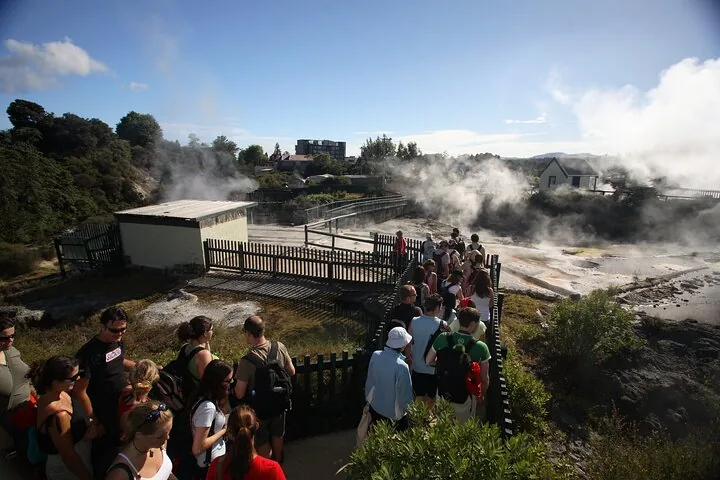
Whakarewarewa Village Guided Tour — The Living Māori Village
- 4.7/5 (539 reviews)
- 1 hour
- Free cancellation
- Operated by Whakarewarewa, The Living Maori Village
Includes Entry Ticket
You'll choose your date and complete the booking on Viator. Reserve now, pay later on most departures.
Quick answer: what do you do?
A typical experience can include:
- guided storytelling
- Māori history
- pōwhiri
- haka
- waiata
- poi
- waka
- traditional weapons
- village interpretation
- geothermal cooking
- carving and weaving
- sacred sites
- native forest
- hāngī
- geothermal features
No single ticket includes all of these.
What does “living Māori village” mean?
At Whakarewarewa, Tūhourangi Ngāti Wāhiao families live in the village today. It is not an abandoned settlement or an open-air museum.
Visitors enter as guests on the guided village tour, led by descendants of the early Whakarewarewa guides, and learn about:
- community history
- geothermal living
- cooking
- bathing
- cultural landmarks
- the village’s guiding tradition
Other Experiences
Other experiences you might enjoy
More ways to experience Māori culture in Rotorua — all bookable with free cancellation.

Can you walk around Whakarewarewa by yourself?
Not inside the living village. Whakarewarewa states that there is no access to the village without a guide, and the village closes to the public at 4pm each day. Guided tours run through the day, with the first at 9am and the last at 3pm.
The geothermal trails are different: they are self-guided and sold on their own ticket or as the Whaka Trails and Māori Village Combo. Keep the two apart:
- the residential village, guided only
- the visitor geothermal trails, self-guided on the relevant ticket
What do you learn about geothermal living?
Whakarewarewa explains how geothermal resources shape everyday life, which is what makes it distinctive. You may learn about:
- cooking with steam and hot water
- bathing
- heating
- adapting homes and community life to geothermal activity
On the combo ticket you eat corn on the cob cooked in the village’s own hot pool. It is the clearest way to see the link between Māori culture and Rotorua’s landscape.
Is cultural performance included?
Not always. Whakarewarewa sells its guided tour and its cultural performance as separate tickets, and the village tour ticket does not include the show. If haka matters to you, make sure your ticket names the performance.
What happens at Mitai?
Mitai is built as a sequence of experiences. A typical programme can include:
- waka
- pōwhiri
- wero
- waiata
- mōteatea
- poi
- haka
- traditional weapons
- instruments
- storytelling
- the sacred spring
- the forest
The programmes that include a meal add hāngī: the daytime Voyages of Māori serves it as lunch, and the Mitai evening experience serves it as dinner and ends with glow worms.
Will you see a waka?
At Mitai, yes. Warriors paddle a waka taua (war canoe) down the Wai-o-Whiro Stream, one of the clearest visual differences between Mitai and the other Rotorua Māori attractions.
Will you experience pōwhiri and wero?
At Mitai, both are part of the programme. Hosts explain what is happening, so you do not need to arrive knowing the protocol. Our guide to the cultural performance explains each part.
Will you see traditional weapons?
Some programmes include demonstrations and explanations of ancestral weapons and instruments. If they matter to you, ask before you book.
Is there a sacred spring?
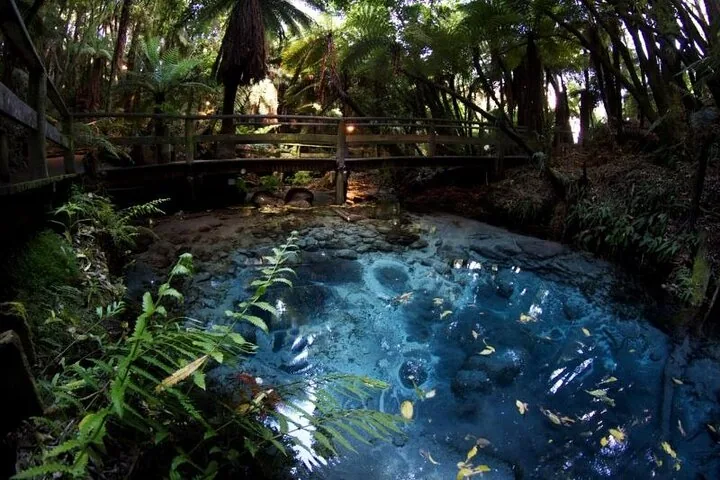
Yes, at Mitai. The programme includes a walk to Te Puna Tapu o Tūhoe, a freshwater spring below the forest, which adds a quieter spiritual and environmental part to the visit.
Is Mitai a real residential village?
No. Mitai’s visitor format is different from Whakarewarewa’s. Parts of the experience interpret traditional Māori life, including a reconstructed fortified village site in the forest, but it is not a currently inhabited village.
Mitai vs Whakarewarewa
Whakarewarewa
Think:
- living community
- geothermal daily life
- local history
- Tūhourangi Ngāti Wāhiao
- guided village
Mitai
Think:
- waka
- cultural performance
- storytelling
- hāngī
- forest
- sacred spring
Neither is better overall. They put the emphasis in different places.
Where does Te Puia fit?
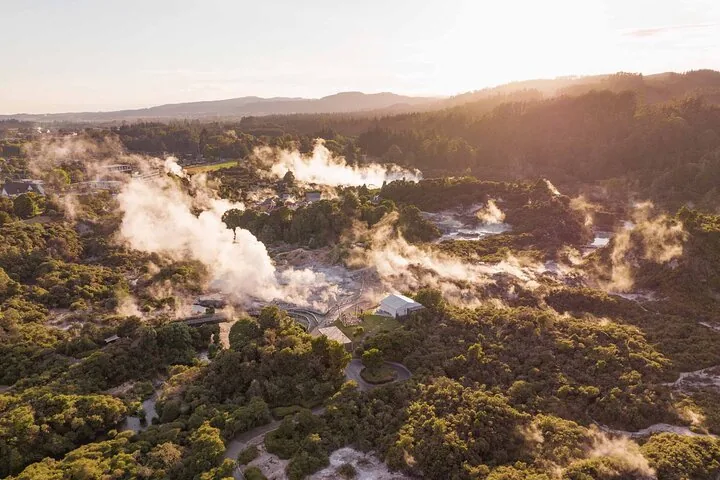
Te Puia is a broad cultural and geothermal destination more than a “Māori village”. It combines:
- the Te Whakarewarewa geothermal valley
- Pōhutu Geyser
- the Kiwi Conservation Centre
- the New Zealand Māori Arts and Crafts Institute
- carving
- weaving
- cultural performances
- hāngī dining
It makes the most sense if you want Māori culture, traditional arts and geysers in one place. The daytime Te Rā guided experience covers the valley, the kiwi and the institute in 90 minutes. Te Puia and Whakarewarewa share the same valley but are separate organisations with separate entrances, so one ticket does not cover both; our Whakarewarewa vs Te Puia comparison sets out what each ticket buys.
Will you see carving and weaving?
Te Puia is the strongest choice if traditional arts are a priority, because the New Zealand Māori Arts and Crafts Institute on site trains carvers and weavers in wood, bone, stone and flax.
Will you eat a hāngī?
Only if your ticket includes it. This is one of the most common misunderstandings: “village experience” does not automatically mean a meal. Our guide to hāngī food covers what is served where.
How long does it take?
| Experience | Approximate duration |
|---|---|
| Guided living-village tour (Whakarewarewa) | ~1 hour |
| Village tour + geothermal trails (Whakarewarewa) | 1–3 hours |
| Te Puia Te Rā guided experience | ~1.5 hours, longer with add-ons |
| Te Puia Te Rā + haka performance | ~2 hours |
| Culture + hāngī lunch (Mitai, daytime) | ~2 hours |
| Hāngī dinner cultural experience (Mitai, Te Puia, Te Pā Tū) | ~2.75–3 hours |
Our duration guide breaks down what each length includes.
Is it mostly walking?
No, but expect some walking. The programme usually alternates between:
- walking
- listening
- watching performances
- standing at sites
- sitting for meals or shows
Wear comfortable shoes. Mitai’s forest walk has steps and some uneven ground.
Is it outdoors?
At least partly. Mitai uses forest and stream settings, Whakarewarewa is an outdoor residential and geothermal village, and Te Puia combines indoor and outdoor areas. Dress for the weather.
What happens if it rains?
Ordinary rain does not normally cancel the experience. Mitai, for example, operates in all weather. Bring a waterproof layer.
Children
These experiences can work well for children because they combine:
- waka
- haka
- poi
- music
- geothermal steam
- storytelling
- food
For very young children, the shorter products are easier.
Accessibility
Accessibility varies a lot. Whakarewarewa states that all areas and surfaces are wheelchair accessible, while at Mitai the exit into the forest is via stairs, so wheelchair users view the waka from a platform and miss the glow worms. Ask about:
- stairs
- slopes
- uneven ground
- wheelchair access
- accessible toilets
- transport between sections
Photos
Photography is generally fine in visitor areas, but follow your hosts’ instructions and remember that some spaces are residential or culturally significant.
Is it interactive?
Usually through questions, storytelling and guided participation. You will not be forced to perform.
Is it respectful to visit?
Rotorua has a long history of Māori-led hospitality to visitors. The key is to come as a guest:
- listen to the guides
- stay on visitor routes
- respect private areas
- follow photography instructions
- do not treat homes and cultural spaces like a theme park
Is it “authentic”?
Instead of asking whether something is “100% authentic”, ask:
- Who owns and operates it?
- Who is telling the stories?
- Is it connected with local people and land?
- Is cultural context provided?
- Is the community in control of the presentation?
These questions tell you more than a marketing label.
Which should you choose?
Best for geothermal community life
Whakarewarewa, on the guided village tour.
Best for waka, performance and forest
Mitai, on the evening experience or the daytime Voyages of Māori.
Best for geothermal landscape and traditional arts
Te Puia, on Te Rā + Haka if you also want the performance.
Still unsure? Our format guide walks through the decision in order.
Common mistakes
- assuming every Māori village is residential
- assuming every ticket includes haka
- assuming every ticket includes hāngī
- confusing Te Puia and Whakarewarewa
- booking only by price
- treating residential spaces like an open-air museum
Final answer
At Whakarewarewa, you visit a living Māori community and learn how daily life is shaped by the geothermal ground.
At Mitai, you follow a cultural journey through waka, welcome, performance, storytelling, forest and, on the meal programmes, hāngī.
At Te Puia, Māori culture comes together with geothermal Rotorua and the New Zealand Māori Arts and Crafts Institute.
Before booking, decide what you want most: a living community, an immersive performance, traditional arts, hāngī or geothermal landscapes, or a combination of several of them.
Pick Your Format, Then Your Evening
A village walk, a geothermal visit, an evening pōwhiri and hāngī, or a day on the land with an iwi guide — thirteen experiences compared, with free cancellation on every one.
Check Availability & Book