What Is a Māori Cultural Experience? A First-Time Visitor's Guide to Rotorua
Pōwhiri, haka, waiata, waka, hāngī: what a Māori cultural experience in Rotorua includes, the words you will hear, how to behave, and which venue suits a first visit.
A Māori cultural experience in Rotorua is a guided introduction to the people, traditions, stories, performing arts, food and relationship with the land of Māori, the Indigenous people of Aotearoa New Zealand. You need no prior knowledge to go: your hosts explain the protocol as it happens, most of the interpretation is in English, and every venue welcomes first-time visitors.
Depending on the ticket, you might watch haka and poi, hear traditional songs and chants, learn about Māori values, see a waka travel down a forest stream, visit a living village, watch carving and weaving, eat a hāngī meal or walk through geothermal landscapes. This guide explains what each of those things is, so you know what you are watching when you get there.
Check Availability
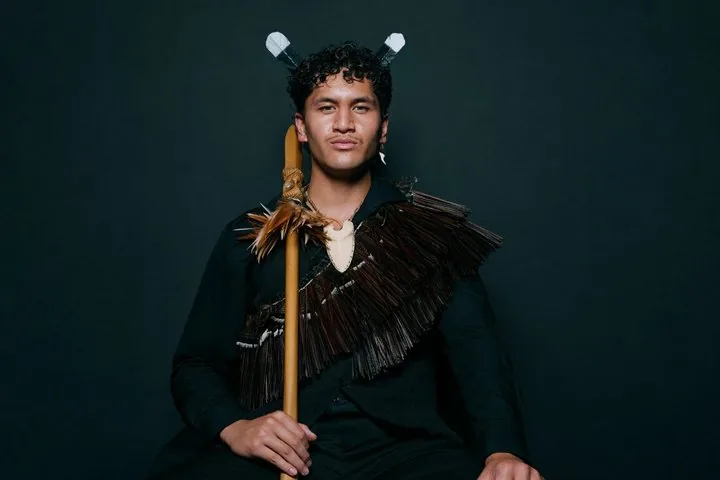
Te Pā Tū: Māori Cultural Experience & Seasonal Feast
- 4.8/5 (1,703 reviews)
- 3 hours
- Free cancellation
- Operated by Te Pa Tu - The Gathering Place
Includes Traditional welcome ceremony · Māori fusion feast · In-vehicle air conditioning
You'll choose your date and complete the booking on Viator. Reserve now, pay later on most departures.
What can a Māori cultural experience include?
- pōwhiri (welcome)
- wero (ceremonial challenge)
- waiata (song)
- mōteatea (traditional chant)
- poi
- haka
- traditional weapons and instruments
- storytelling
- waka
- carving and weaving
- a living-village visit
- geothermal cooking
- hāngī
- native forest
- sacred sites
- geothermal pools and geysers
Not every venue includes every element. A 30–40 minute show covers the performing arts; a three-hour evening adds the welcome, the meal and the setting. Our guide to dinner vs cultural show only lists what each format adds.
Why Rotorua?
Māori communities in Rotorua have welcomed visitors for well over a century, much of it around the geothermal valleys. That combination of:
- Māori community
- geothermal landscape
- guiding
- storytelling
- visitor hospitality
is one reason Rotorua is one of the easiest places in New Zealand for overseas visitors to learn about Māori culture.
Is Māori culture the same everywhere in New Zealand?
No. Different iwi (tribes) and hapū (sub-tribes) have their own:
- histories
- whakapapa (genealogy)
- stories
- places
- traditions
What you hear in Rotorua is tied to local people and local land. It does not stand for one universal version of Māori culture.
Other Experiences
Other experiences you might enjoy
More ways to experience Māori culture in Rotorua — all bookable with free cancellation.
The words and traditions you will meet
What is te reo Māori?
Te reo Māori is the Māori language. You will hear it in:
- greetings
- songs
- chants
- ceremonies
- place names
Hosts use English for most of the explanation, so you do not need to speak Māori. A few useful words:
- kia ora: hello, thank you
- whānau: family
- kai: food
- whenua: land
- manaakitanga: hospitality and care for guests
What is a pōwhiri?
A pōwhiri is a traditional welcoming process. Visitor experiences adapt the format to the setting. Follow your hosts’ instructions; nobody expects you to arrive knowing the protocol.
What is a wero?
A wero is a ceremonial challenge, laid down by a warrior as visitors arrive. The movements can look fierce, but the context is formal and ceremonial.
What is haka?
Haka is a Māori performance form that combines movement, voice, rhythm and expression. Different haka serve different purposes, so calling haka a “war dance” is too simple.
Is the whole experience just haka?
No. Haka is the best-known element, but a fuller experience can include:
- storytelling
- waiata
- poi
- ceremonies
- food
- carving
- weaving
- village life
- geothermal traditions
What is waiata?
Waiata means song. A waiata can carry stories, memory, emotion and identity.
What is mōteatea?
Mōteatea are traditional chants.
What is poi?
Poi are weighted balls on cords, swung rhythmically during a performance.
What is tī rākau?
Tī rākau are rhythmic stick games, played as part of a performance.
What is a waka?
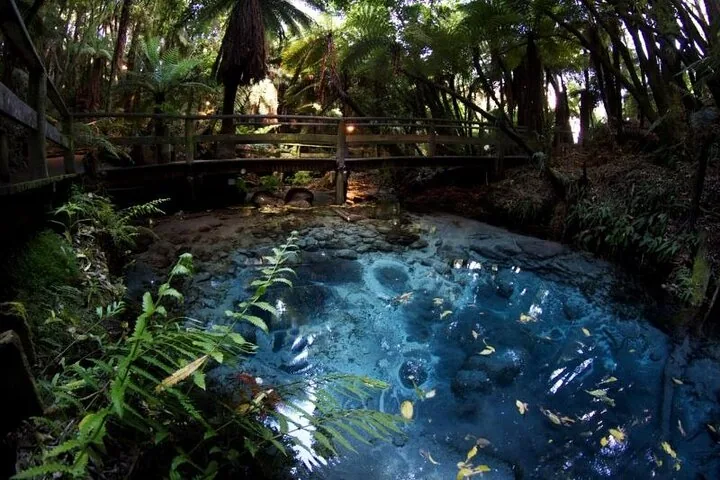
A waka is a canoe. At Mitai, warriors paddle a waka down a forest stream as part of the programme.
What is a marae?
A marae is a communal gathering place with great cultural importance. Follow local guidance on how to behave and where you may go.
Our cultural performance guide goes through a performance item by item.
Do you visit a real Māori village?
That depends on the venue.
Whakarewarewa
A living Māori community, where people still live, cook and bathe with geothermal heat. The Whakarewarewa Village Guided Tour ($33, about an hour, 4.7/5 from 539 reviews) is the way in.
Mitai
An evening programme of welcome, performance, stories, forest and waka, with a hāngī dinner included in every evening ticket. The Mitai Māori Village Cultural Experience costs $103 for about three hours (4.6/5 from 1,442 reviews).
Te Puia
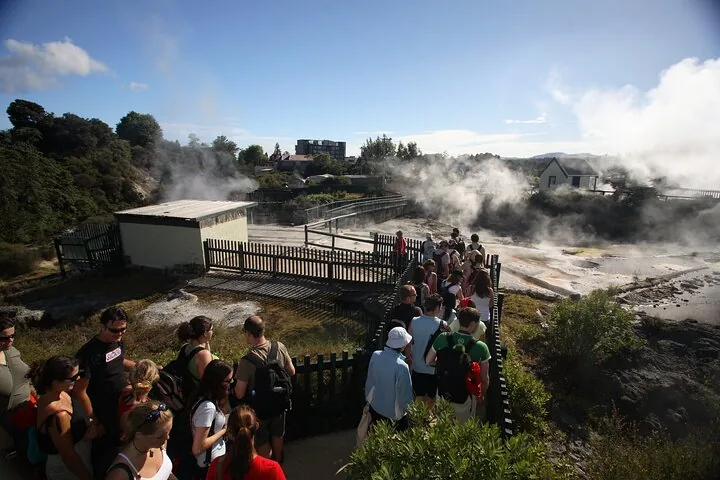
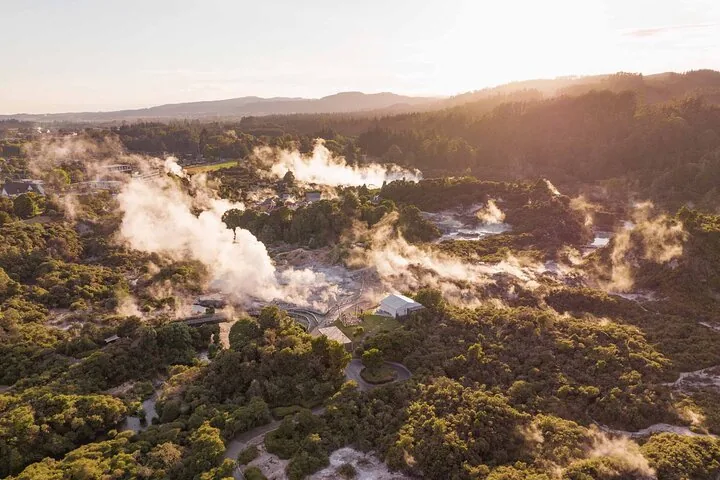
A Māori cultural and geothermal destination, home to Pōhutu Geyser and the national carving and weaving schools.
Te Pā Tū
An evening in a forest pā with a traditional welcome, cultural performance and a Māori fusion feast. Te Pā Tū ($170, about three hours, 4.8/5 from 1,703 reviews) is the only evening with return transport from a central Rotorua meeting point included.
The village experience guide describes a visit to each step by step.
What each venue does best
What is special about Whakarewarewa?
Its main strength is the link between a living Māori community and geothermal daily life. You learn how the community uses geothermal resources for:
- cooking
- bathing
- heating
- daily living
What is special about Mitai?
Mitai’s evening programme runs through:
- waka
- welcome
- performance
- storytelling
- weapons
- instruments
- forest and glow worms
- the sacred spring
- hāngī, included in every evening ticket
By day, Voyages of Māori at Mitai ($85, two hours, 4.8/5 from 96 reviews) runs the waka and the performance, and Mitai serves the hāngī as lunch.
What is special about Te Puia?
Te Puia combines:
- Māori culture
- Pōhutu Geyser
- the geothermal valley
- the Kiwi Conservation Centre
- the New Zealand Māori Arts and Crafts Institute
- carving
- weaving
- cultural performance
- a hāngī dinner in the evening
By day, the Te Rā guided experience costs $64 for 1.5 hours (4.5/5 from 380 reviews). In the evening, Te Puia Te Pō ($124, about three hours, 4.7/5 from 120 reviews) adds the hāngī buffet and the valley after dark.
Will you see carving and weaving?
At Te Puia, yes. Students and master carvers and weavers train there at the New Zealand Māori Arts and Crafts Institute, and you can watch them work.
For a side-by-side on the evenings, see Te Pā Tū vs Mitai vs Te Puia.
Hāngī and the meal
What is hāngī?
A hāngī is a traditional Māori way of cooking food with heat in an earth oven. Visitor meals usually pair earth-cooked meats and vegetables with a wider buffet. Our hāngī food guide describes what is served.
Does every experience include hāngī?
No. Shorter tickets may include only a performance or a guided tour. Read the inclusions before you book.
How long does it take?
| Experience type | Example | Approximate duration |
|---|---|---|
| Standalone show | Whakarewarewa cultural performance ($21, 38 reviews) | 30–40 minutes |
| Guided village | Whakarewarewa village tour | ~1 hour |
| Guided cultural and geothermal visit | Te Puia Te Rā | ~1.5 hours |
| Culture + hāngī lunch | Mitai daytime voyage | ~2 hours |
| Evening with dinner | Mitai, Te Pā Tū, Te Puia Te Pō | ~3 hours |
| Full combination | Te Pō combo ($176) | ~4.5 hours |
Our duration guide explains what fills each length.
Daytime or evening?
Daytime
Best for:
- day-trippers
- younger children
- traditional arts
- geothermal sightseeing
- shorter schedules
Evening
Best for:
- hāngī
- a fuller atmosphere
- a complete evening activity
- forest or geothermal settings after dark
Practical questions for a first visit
Children
Many experiences work well for children, because they combine performance, movement, stories, food and the outdoors. For very young children, the length matters more than the content: a 30–40 minute show is easier than a three-hour evening.
Accessibility
Access differs between venues and ticket types. Ask about:
- steps
- uneven paths
- wheelchair routes
- toilets
- seating
- shuttle access
What should you wear?
No formal clothing is required. Wear comfortable shoes and bring layers for the weather, since parts of every programme are outdoors.
Can you take photos?
Usually, in at least some visitor areas. Follow your hosts’ instructions and put the camera away for restricted or ceremonial moments.
Will you have to participate?
You may be invited to join some activities, such as a haka lesson, but nobody will make you perform.
Do you need to know Māori etiquette?
No. Your hosts will explain what to do. The basics:
- arrive on time
- listen carefully
- follow instructions
- stay within visitor areas
- respect photography rules
- treat cultural spaces with respect
Is it authentic, or too touristy?
Is it “authentic”?
A paid tourism experience is not the same as a private family or community occasion, but that does not make it culturally empty. Better questions to ask of any venue:
- Who owns and runs the experience?
- Who is telling the stories?
- Is the community connected with the place?
- Do the hosts explain the cultural context?
- Are Māori hosts presenting the traditions?
Is it too touristy?
Rotorua’s Māori cultural experiences are tourism products, and Rotorua also has a long history of Māori-led guiding and hospitality. “Touristy” does not automatically mean “empty.” The strongest experiences stay grounded in local people, stories and place.
Which experience fits which interest?
Haka on a tight schedule
Book a short cultural show, such as the 30–40 minute Whakarewarewa performance.
Living Māori community
Book Whakarewarewa.
Waka, performance and forest
Book Mitai.
Traditional arts and geothermal Rotorua
Book Te Puia.
Māori food
Book a meal-inclusive programme: the hāngī buffet at Mitai or Te Puia Te Pō, Te Pā Tū’s plated seasonal feast, or Mitai’s daytime voyage for hāngī at lunch.
Still undecided? Which Rotorua Māori experience is right for you matches all thirteen tours to a type of traveller, and what to know before you book covers timing, transport and tickets.
Frequently Asked Questions
Can you learn about Māori culture without booking dinner?
Yes. You can choose a cultural performance, a guided village tour at Whakarewarewa, a geothermal and cultural visit at Te Puia, or the traditional arts at Te Puia’s carving and weaving schools, all without a meal.
Do I need to speak Māori or know the protocol?
No. Hosts explain in English what is happening and what you should do, including during the welcome.
Is there one standard Māori cultural experience?
No. An experience can include a ceremonial welcome, haka, waiata, poi, storytelling, waka, traditional arts, village life, geothermal traditions and hāngī, but each venue combines them differently. Decide what you most want to understand (performance, food, village life, traditional arts, geothermal culture or a mix) and book the experience that offers it.
What is the best advice for a first visit?
Arrive curious, listen to your hosts and give yourself enough time to see more than the haka alone. A three-hour evening or a village tour plus a show gives a broader picture than a performance on its own.
Pick Your Format, Then Your Evening
A village walk, a geothermal visit, an evening pōwhiri and hāngī, or a day on the land with an iwi guide — thirteen experiences compared, with free cancellation on every one.
Check Availability & Book